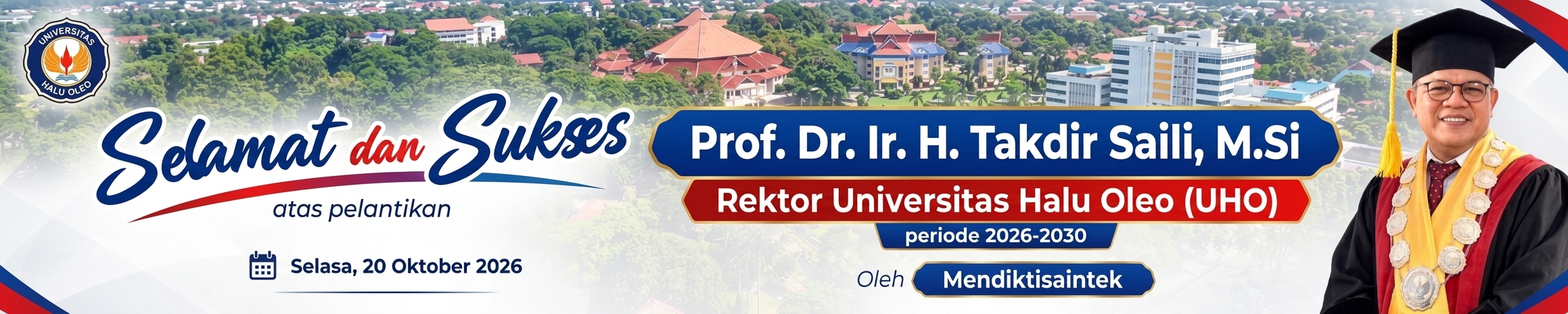
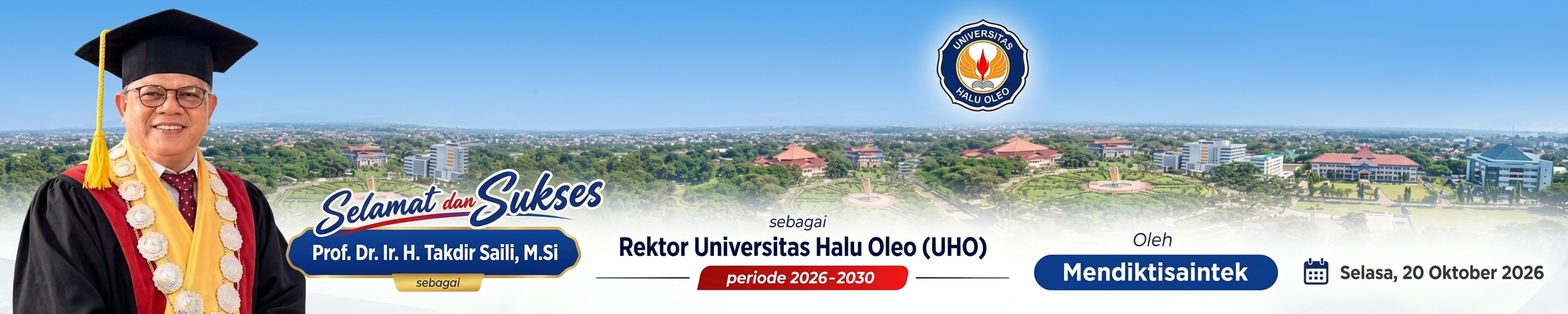
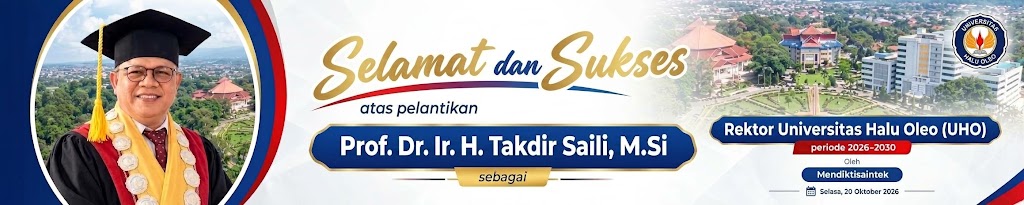
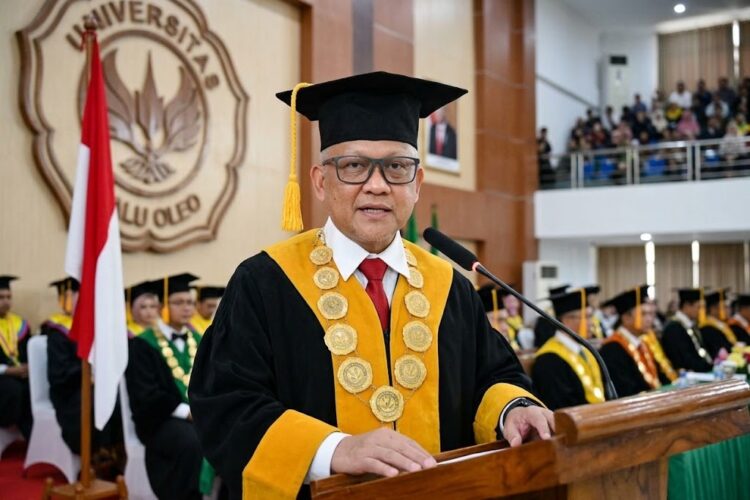
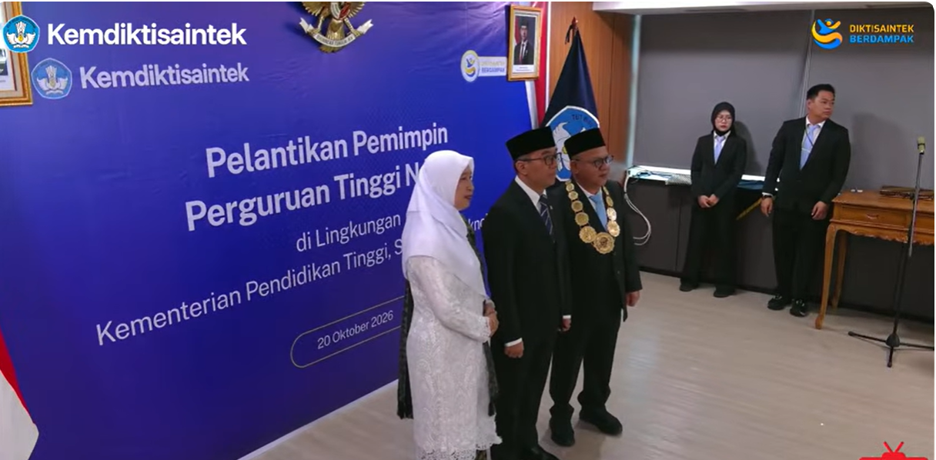
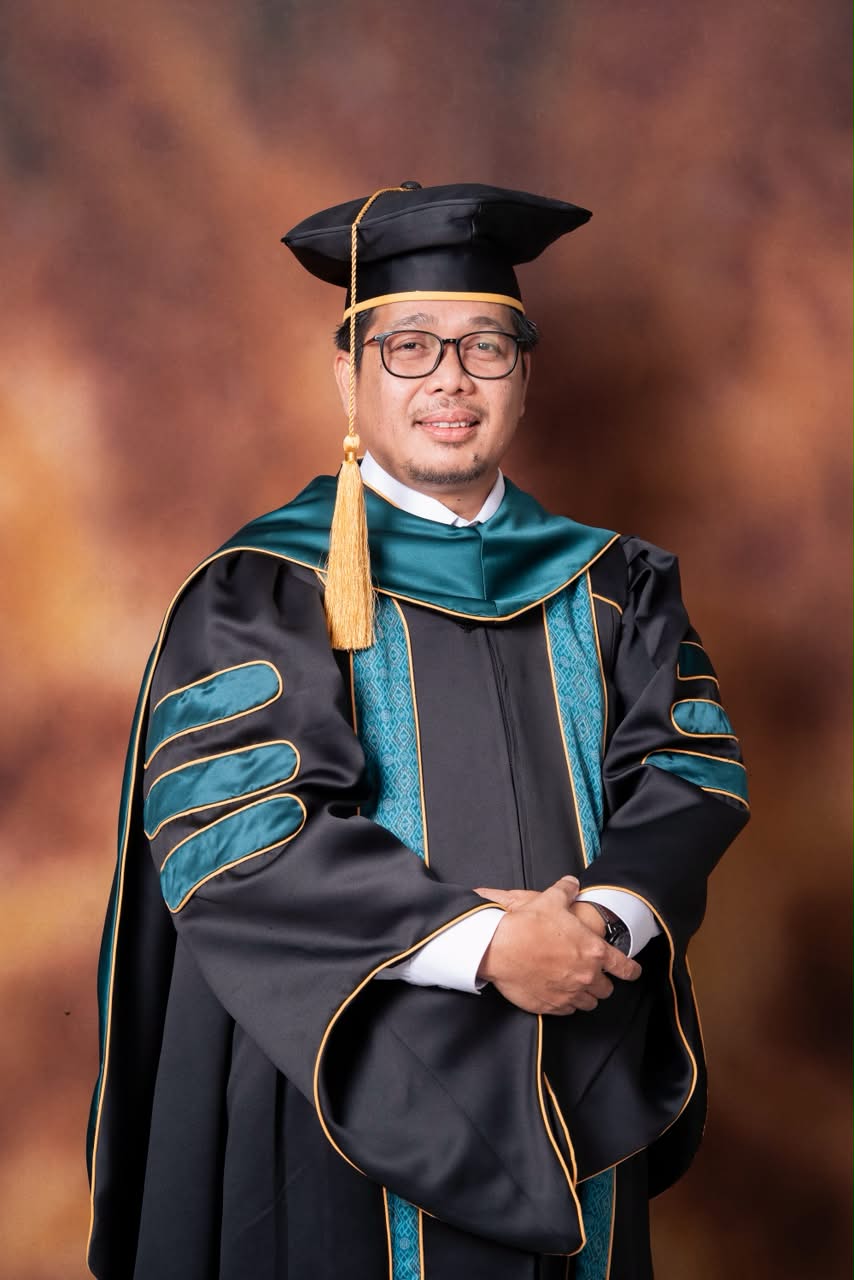
 JAKARTA, 20 Oktober 2026 — Prof. Dr. Ir. Takdir Saili, M.Si., resmi dilantik sebagai Rektor Universitas Halu Oleo (UHO) periode 2026–2030 oleh Menteri Pendidikan Tinggi, Sains, dan Teknologi Republik Indonesia, Prof. Brian Yuliarto, Ph.D., pada Selasa (20/10/2026). Pelantikan ini menandai dimulainya amanah kepemimpinan Prof. Takdir Saili dalam mengarahkan penyelenggaraan pendidikan tinggi di Universitas Halu Oleo untuk empat tahun ke depan, sekaligus memperkuat peran perguruan tinggi dalam pengembangan ilmu pengetahuan, penelitian, inovasi, dan pengabdian kepada masyarakat.
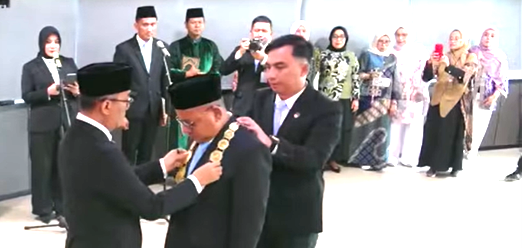
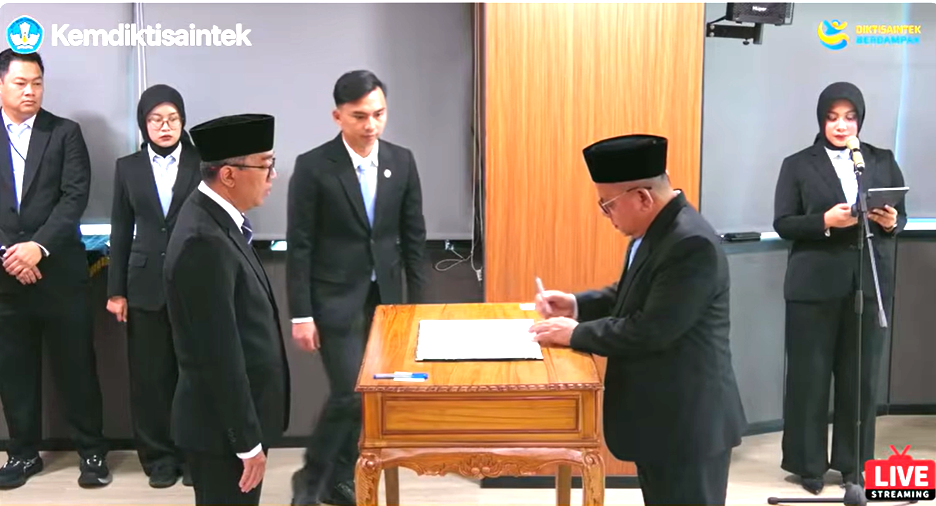
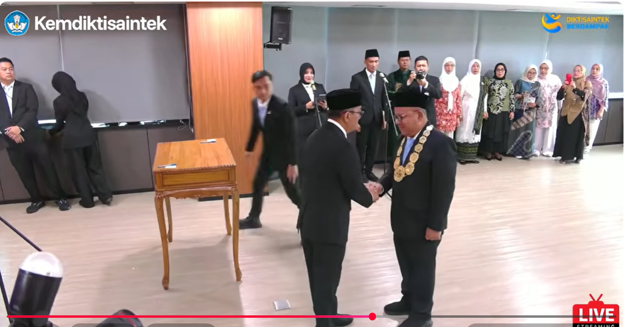
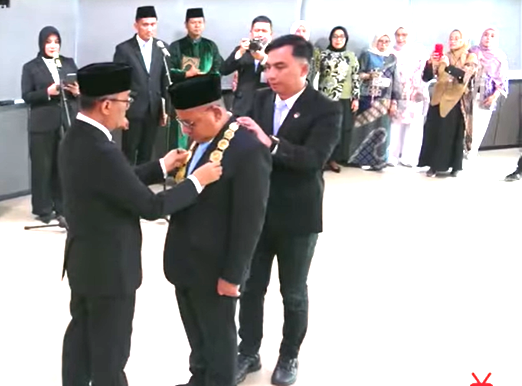
Pelantikan tersebut merupakan bagian dari upacara pelantikan pimpinan perguruan tinggi negeri di lingkungan Kementerian Pendidikan Tinggi, Sains, dan Teknologi Republik Indonesia. Rangkaian kegiatan berlangsung secara resmi dan khidmat, diawali dengan kedatangan Menteri Pendidikan Tinggi, Sains, dan Teknologi, kemudian dilanjutkan dengan menyanyikan lagu kebangsaan Indonesia Raya. Prosesi berikutnya meliputi pembacaan keputusan menteri tentang pengangkatan Rektor Universitas Halu Oleo, pengambilan sumpah jabatan, penandatanganan berita acara sumpah, serta pelantikan yang ditandai dengan pengalungan tanda jabatan kepada rektor yang dilantik.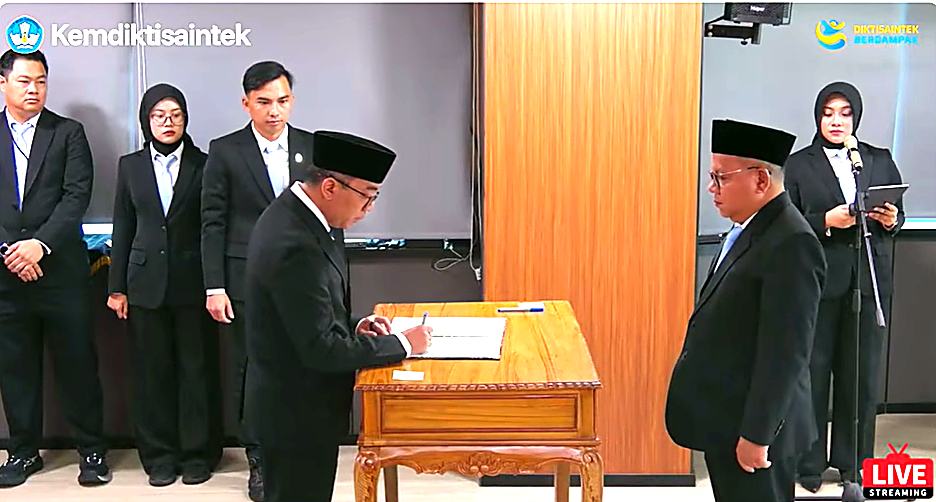
Dasar pengangkatan Prof. Takdir Saili sebagai Rektor Universitas Halu Oleo tertuang dalam Keputusan Menteri Pendidikan Tinggi, Sains, dan Teknologi Republik Indonesia Nomor 231/M/K/2026 tentang Pengangkatan Rektor Universitas Halu Oleo Periode Tahun 2026–2030, sebagaimana dibacakan dalam prosesi pelantikan. Keputusan tersebut menetapkan Prof. Dr. Ir. Takdir Saili, M.Si., untuk mengemban jabatan Rektor Universitas Halu Oleo sejak tanggal pelantikan. Pembacaan keputusan ini menjadi bagian penting dari rangkaian acara yang menegaskan pengangkatan rektor secara resmi berdasarkan keputusan menteri.
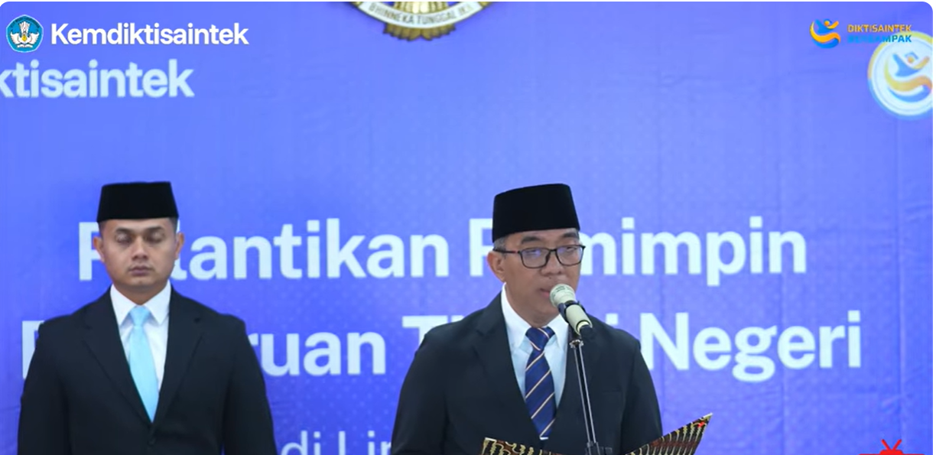
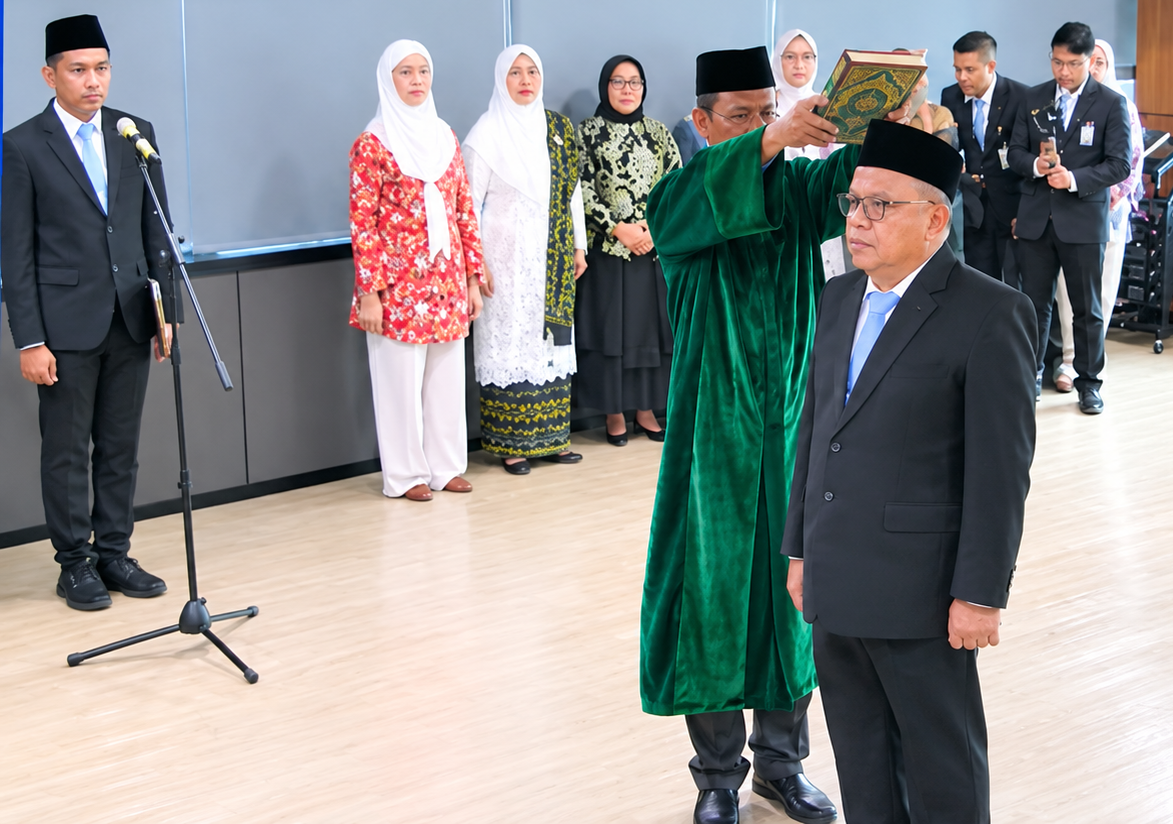
Setelah pembacaan keputusan, prosesi dilanjutkan dengan pengambilan sumpah jabatan yang dipimpin langsung oleh Menteri Pendidikan Tinggi, Sains, dan Teknologi. Dalam sumpahnya, Prof. Takdir Saili menyatakan kesediaan untuk menjalankan amanah jabatan dengan berlandaskan konstitusi, peraturan perundang-undangan, etika jabatan, dan tanggung jawab kepada bangsa serta negara. Sumpah tersebut juga memuat komitmen untuk bekerja dengan sebaik-baiknya, menjaga integritas, tidak menyalahgunakan kewenangan, serta menghindari segala bentuk perbuatan tercela dalam pelaksanaan tugas.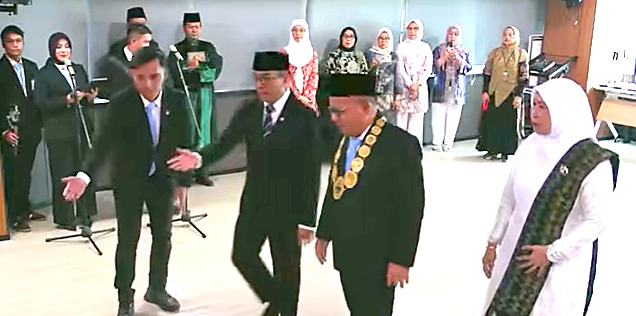
Penandatanganan berita acara sumpah jabatan kemudian dilaksanakan dengan disaksikan oleh Menteri Pendidikan Tinggi, Sains, dan Teknologi. Prosesi dilanjutkan dengan pelantikan resmi dan pengalungan tanda jabatan kepada Prof. Takdir Saili sebagai Rektor Universitas Halu Oleo periode 2026–2030. Rangkaian tersebut menegaskan dimulainya tanggung jawab kepemimpinan rektor dalam menjalankan tugas dan fungsi universitas sesuai dengan ketentuan serta amanah yang telah diberikan.
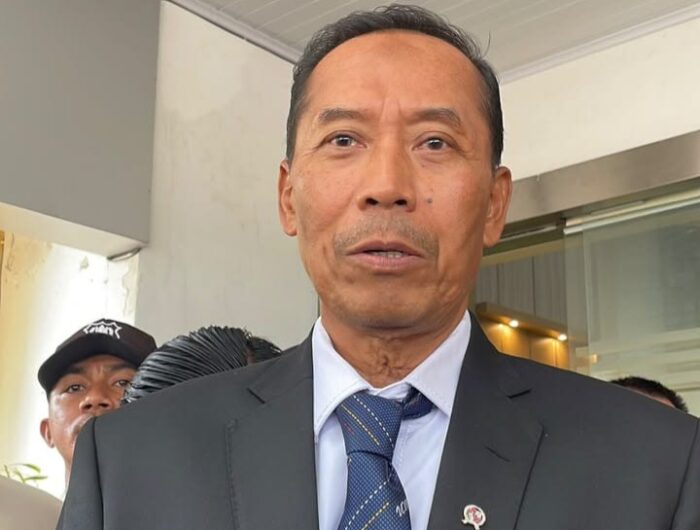
Dalam sambutannya, Menteri Pendidikan Tinggi, Sains, dan Teknologi, Brian Yuliarto, menyampaikan ucapan selamat kepada Prof. Takdir Saili atas pelantikannya sebagai Rektor Universitas Halu Oleo. Ia berharap Prof. Takdir senantiasa diberikan kesehatan dan kebijaksanaan dalam menjalankan tanggung jawab memimpin perguruan tinggi. Menteri juga mengingatkan bahwa jabatan rektor bukan sekadar posisi struktural, melainkan amanah yang berkaitan erat dengan harapan mahasiswa, kepercayaan orang tua, pengembangan kapasitas dosen dan tenaga kependidikan, serta kebutuhan masyarakat terhadap pendidikan tinggi yang berkualitas.
Menurut Brian Yuliarto, perguruan tinggi memiliki tanggung jawab besar dalam menciptakan lingkungan akademik yang mendukung seluruh sivitas akademika untuk berkembang. Mahasiswa perlu memperoleh kesempatan belajar yang baik agar dapat mencapai cita-citanya, sementara dosen harus memiliki ruang yang memadai untuk mengembangkan kemampuan akademik, menghasilkan karya, dan melaksanakan penelitian. Pada saat yang sama, tenaga kependidikan perlu memperoleh penghargaan atas kontribusinya dalam mendukung kelancaran penyelenggaraan pendidikan tinggi. Lingkungan kampus yang aman, terbuka, dan memberikan kesempatan secara adil juga menjadi bagian penting dari upaya menghadirkan pendidikan tinggi yang dapat diakses oleh berbagai kalangan, termasuk mahasiswa yang menghadapi keterbatasan ekonomi.
Menteri selanjutnya menekankan pentingnya memperkuat hubungan antara Universitas Halu Oleo dan kebutuhan masyarakat. Sebagai perguruan tinggi yang berada di Sulawesi Tenggara, UHO diharapkan dapat mengambil peran lebih besar dalam mendukung kemajuan daerah dan kawasan Indonesia Timur. Peran tersebut tidak hanya diwujudkan melalui penyelenggaraan pendidikan bagi mahasiswa, tetapi juga melalui kontribusi keilmuan, penelitian, inovasi, dan kerja sama yang mampu menjawab kebutuhan nyata masyarakat. Dengan demikian, keberadaan perguruan tinggi diharapkan semakin dirasakan manfaatnya dalam mendukung pembangunan daerah sekaligus memperkuat kontribusi pendidikan tinggi bagi kemajuan nasional.
 Untuk mewujudkan peran tersebut, Brian Yuliarto mendorong keterlibatan aktif dosen dan mahasiswa dalam membangun kerja sama dengan masyarakat, pemerintah daerah, industri, dan dunia usaha. Kolaborasi antarpemangku kepentingan dinilai penting agar kegiatan akademik tidak berjalan terpisah dari persoalan dan potensi yang berkembang di lingkungan sekitar. Perguruan tinggi perlu membuka ruang dialog, mendengarkan kebutuhan masyarakat, serta membangun kemitraan yang memungkinkan ilmu pengetahuan dan hasil penelitian dimanfaatkan secara lebih luas. Melalui pendekatan tersebut, kampus dapat memperkuat relevansi pendidikan dan penelitian sekaligus mendorong terciptanya manfaat yang dapat dirasakan oleh masyarakat.
Dalam sambutannya, Menteri juga menyoroti potensi daerah sebagai sumber pembelajaran dan penelitian yang perlu dikembangkan secara berkelanjutan. Potensi tersebut dapat menjadi landasan bagi sivitas akademika untuk menghasilkan kajian, inovasi, dan solusi yang sesuai dengan kebutuhan daerah. Hasil penelitian dan pengembangan ilmu pengetahuan diharapkan tidak berhenti pada lingkup akademik, tetapi juga dapat memberikan kontribusi terhadap penyelesaian persoalan masyarakat, membuka peluang kerja, serta meningkatkan kesejahteraan di lingkungan kampus maupun wilayah sekitarnya. Penekanan ini menempatkan perguruan tinggi sebagai salah satu unsur penting dalam menghubungkan pengembangan ilmu pengetahuan dengan kebutuhan pembangunan.
 Arah tersebut sejalan dengan semangat Dikti Saintek Berdampak, yang ditekankan Menteri sebagai upaya memastikan ilmu pengetahuan dan inovasi membawa manfaat nyata bagi masyarakat. Dalam kerangka ini, keberhasilan perguruan tinggi tidak hanya berkaitan dengan aktivitas akademik di dalam kampus, tetapi juga dengan kemampuan menghasilkan pengetahuan dan inovasi yang relevan dengan persoalan kehidupan. Karena itu, penguatan pendidikan, penelitian, dan kolaborasi dengan berbagai pihak menjadi penting agar hasil kerja perguruan tinggi dapat memberikan kontribusi yang lebih luas bagi masyarakat dan pembangunan daerah.
Menteri turut mengingatkan bahwa perkembangan teknologi yang berlangsung cepat menuntut perguruan tinggi untuk mempersiapkan mahasiswa menghadapi perubahan. Mahasiswa perlu dibekali kemampuan untuk terus belajar, beradaptasi, dan bekerja sama agar mampu merespons tantangan yang terus berkembang. Kemampuan tersebut menjadi bekal penting bagi lulusan untuk menghadapi masa depan dengan percaya diri sekaligus berkontribusi bagi bangsa dan daerahnya. Dalam konteks ini, perguruan tinggi diharapkan mampu membangun proses pembelajaran yang tidak hanya berorientasi pada penguasaan pengetahuan, tetapi juga mendukung pengembangan kemampuan mahasiswa dalam menghadapi perubahan dan bekerja bersama pihak lain.
 Lebih lanjut, Brian Yuliarto menegaskan pentingnya kepemimpinan perguruan tinggi yang berintegritas, merangkul seluruh pihak, dan terbuka terhadap aspirasi warga kampus. Ia mengingatkan bahwa kemajuan universitas harus dibangun melalui kebersamaan serta kerja kolektif seluruh unsur yang ada di dalamnya. Pimpinan perguruan tinggi diharapkan mampu mendengarkan pandangan sivitas akademika, membangun komunikasi yang baik, dan menjaga suasana akademik yang mendukung pengembangan ilmu pengetahuan. Menurutnya, kampus bukanlah arena kontestasi politik, melainkan ruang bersama untuk memperkuat kegiatan akademik, penelitian, dan inovasi demi kemajuan pendidikan tinggi.
Pesan tersebut menegaskan bahwa keberhasilan kepemimpinan rektor tidak dapat dilepaskan dari keterlibatan seluruh keluarga besar Universitas Halu Oleo. Pimpinan universitas, dosen, tenaga kependidikan, mahasiswa, serta para mitra memiliki peran masing-masing dalam mendukung pelaksanaan tridarma perguruan tinggi dan pengembangan institusi. Dengan membangun kebersamaan dan memperkuat kolaborasi, universitas diharapkan mampu menjalankan fungsi pendidikan, penelitian, dan pengabdian kepada masyarakat secara lebih relevan dengan kebutuhan daerah. Dalam sambutannya, Menteri kembali menyampaikan ucapan selamat kepada Prof. Takdir Saili dan berharap agar seluruh pihak senantiasa memperoleh bimbingan dalam memajukan pendidikan tinggi serta melayani masyarakat.
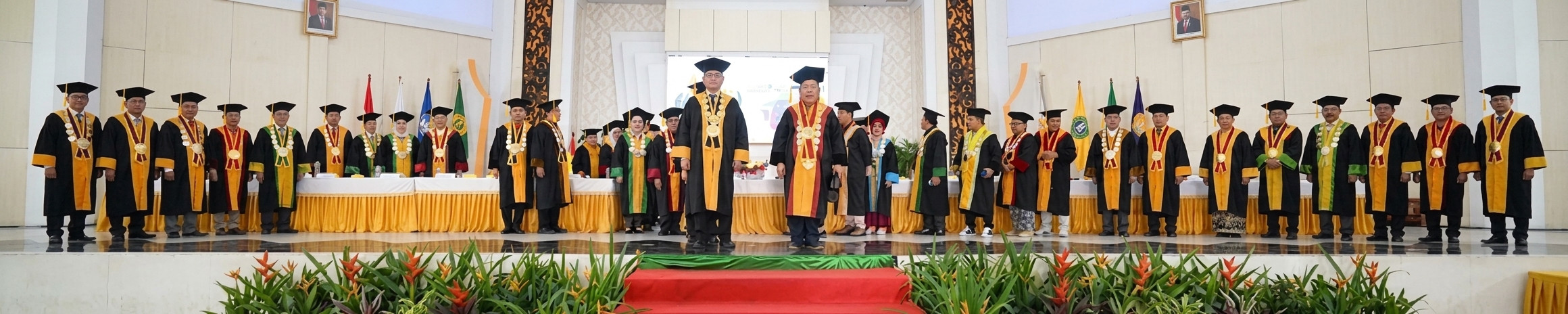
Rangkaian upacara pelantikan kemudian ditutup dengan doa bersama yang dipimpin oleh rohaniwan. Doa tersebut menjadi bagian dari ungkapan harapan agar amanah jabatan yang diberikan dapat dijalankan dengan keimanan, kejujuran, integritas, dedikasi, dan tanggung jawab. Setelah itu, acara dilanjutkan dengan pemberian ucapan selamat kepada pejabat yang dilantik, diawali oleh Menteri Pendidikan Tinggi, Sains, dan Teknologi, kemudian diikuti para tamu undangan, serta sesi foto bersama.
 Pelantikan Prof. Dr. Ir. Takdir Saili, M.Si., sebagai Rektor Universitas Halu Oleo periode 2026–2030 menandai dimulainya babak baru kepemimpinan universitas dalam memperkuat penyelenggaraan pendidikan tinggi dan pengembangan ilmu pengetahuan. Arahan Menteri Pendidikan Tinggi, Sains, dan Teknologi yang disampaikan dalam prosesi pelantikan menjadi penegasan pentingnya integritas kepemimpinan, pembangunan lingkungan akademik yang inklusif, serta penguatan kolaborasi dengan masyarakat dan berbagai pemangku kepentingan. Melalui sinergi seluruh sivitas akademika, Universitas Halu Oleo diharapkan semakin memperkuat kontribusinya dalam mendorong kemajuan Sulawesi Tenggara, kawasan Indonesia Timur, dan pembangunan bangsa.






 Informasi
  Event
Event  Pengumuman


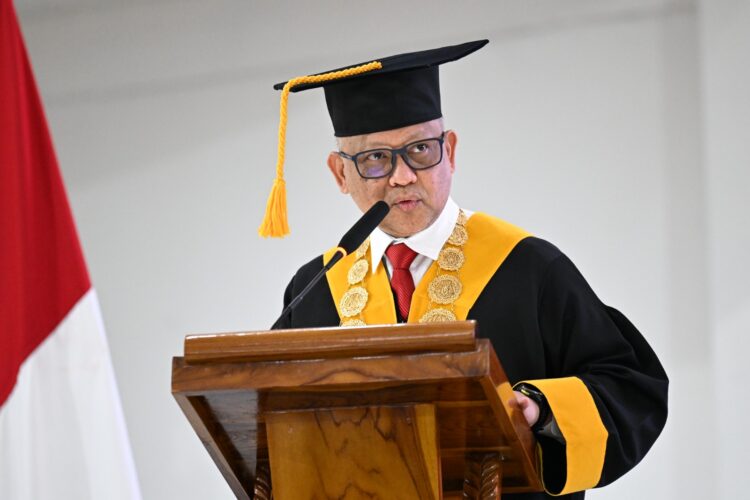









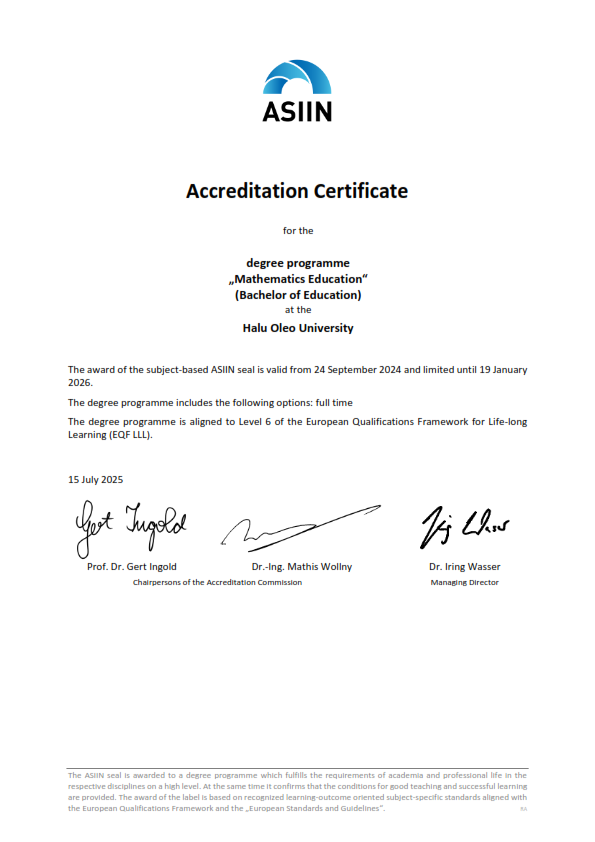
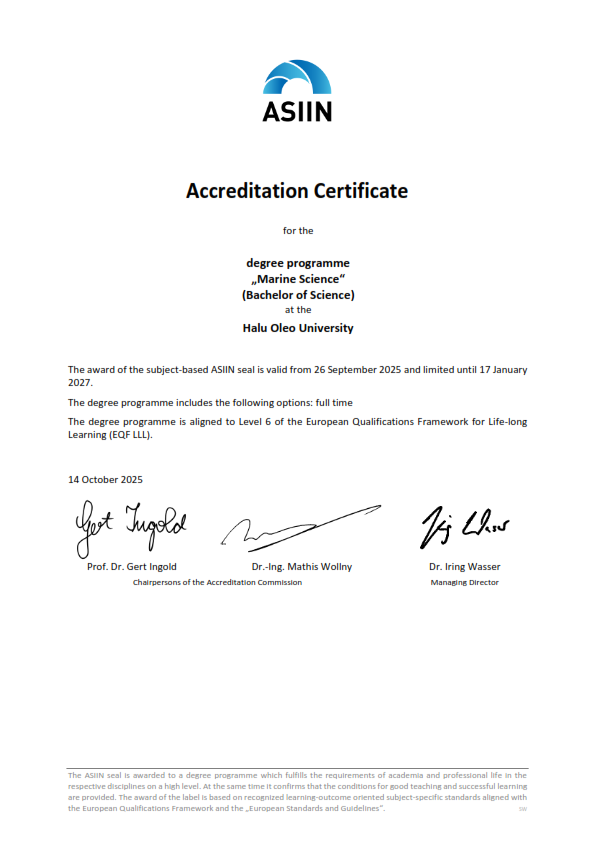
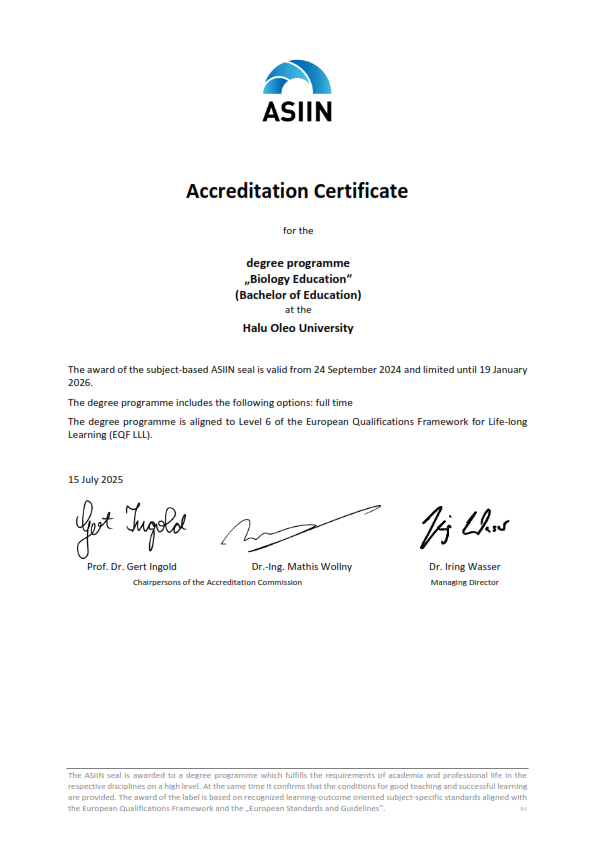
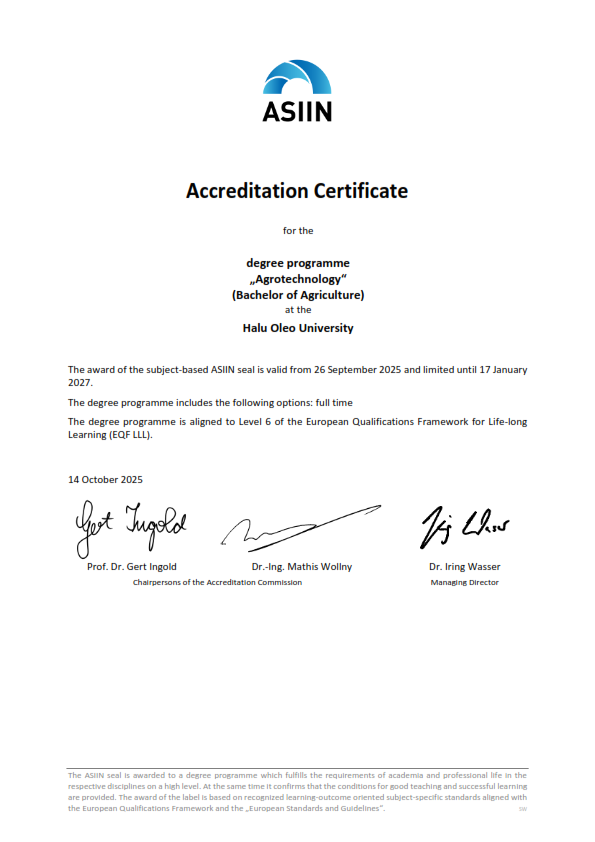
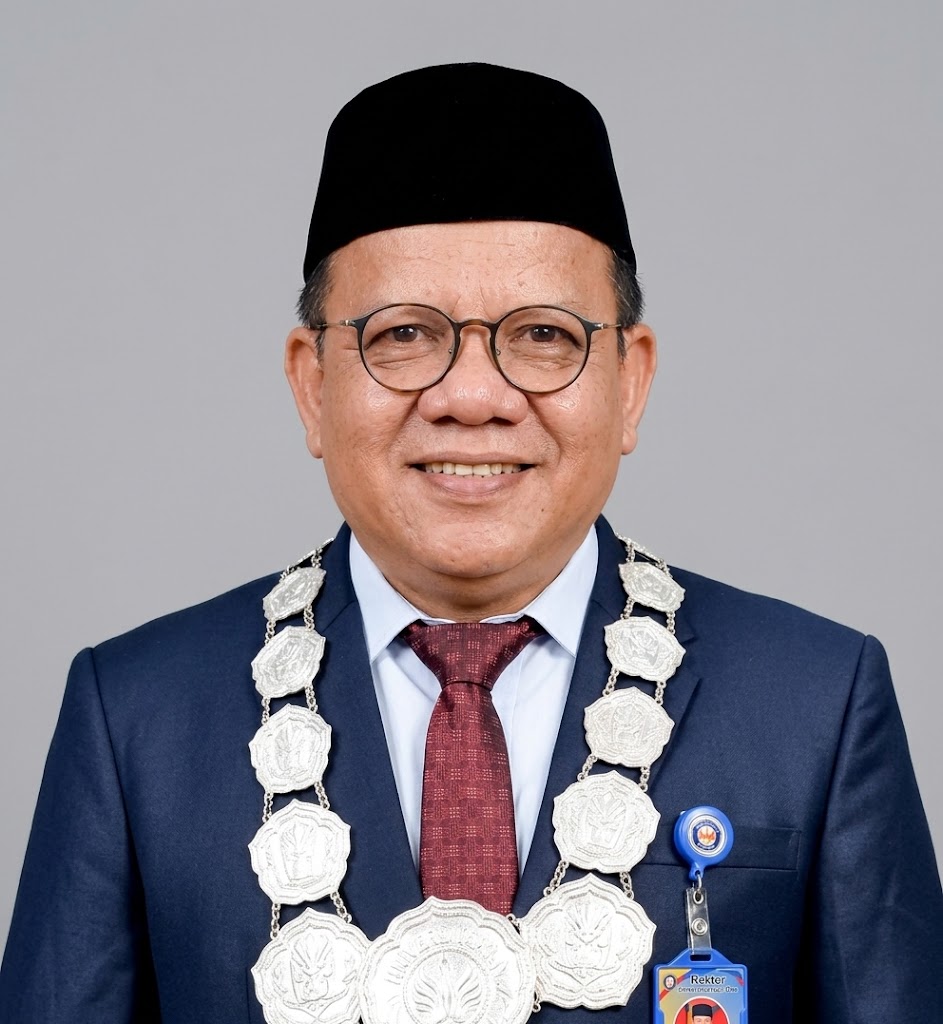
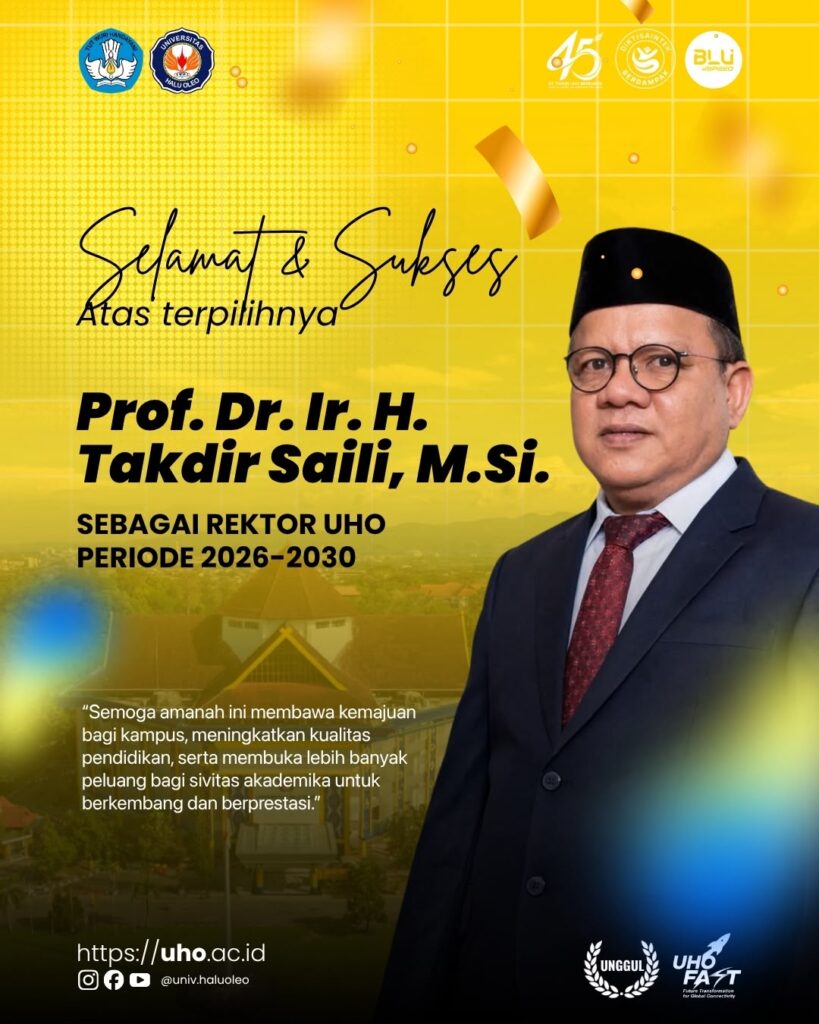


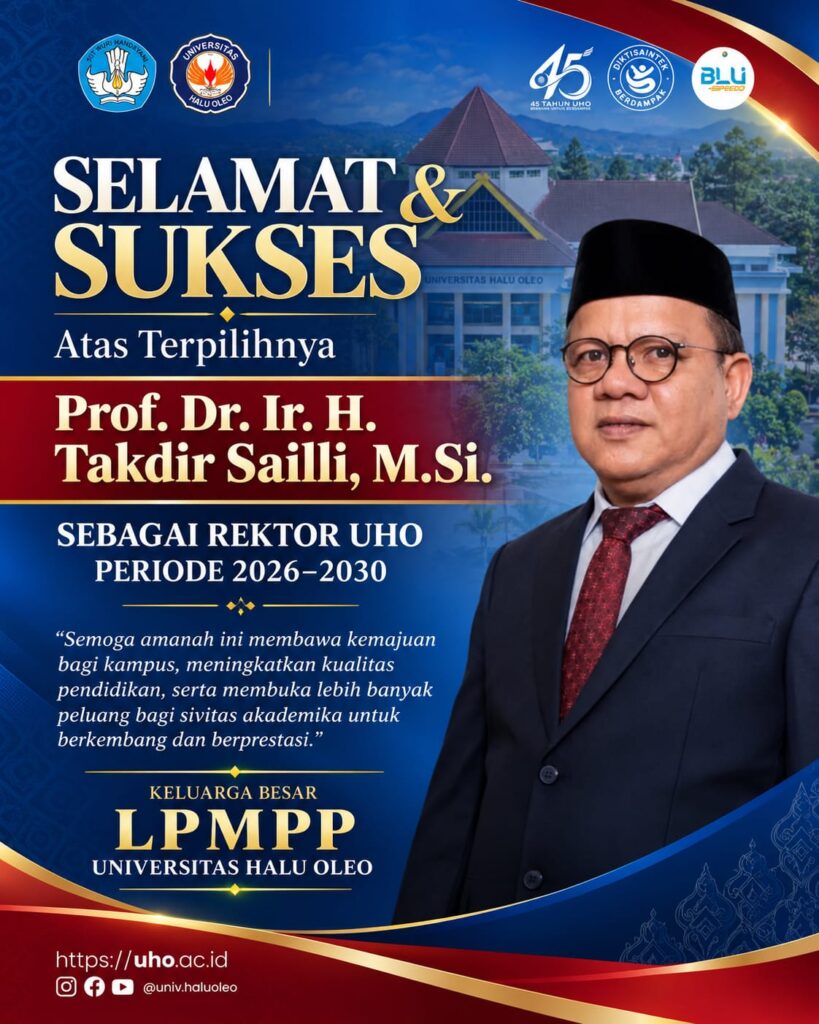
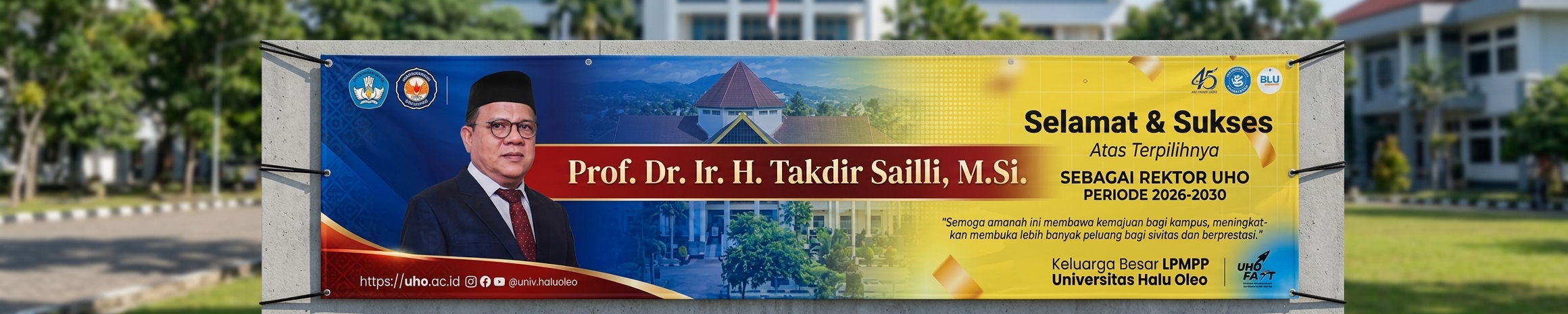
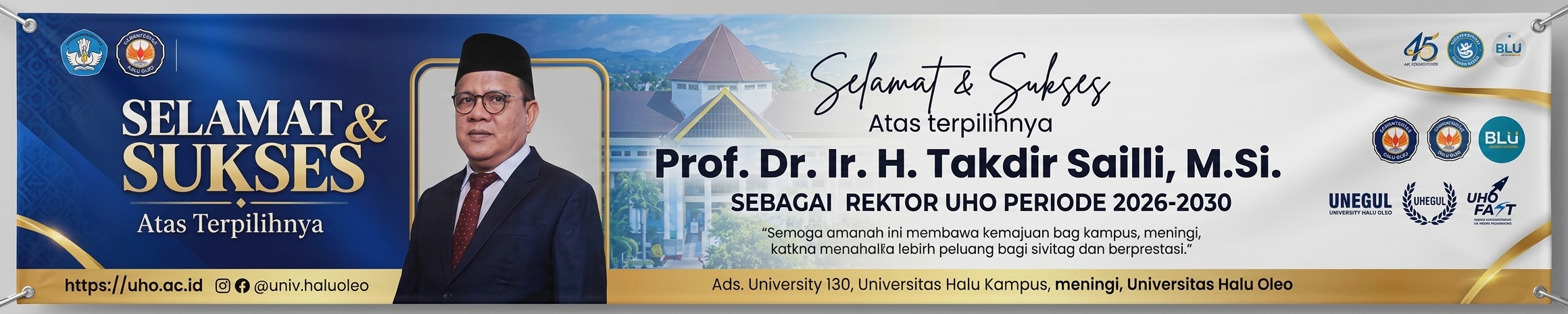 "Semoga amanah ini membawa kemajuan bagi kampus, meningkatkan kualitas pendidikan, serta membuka lebih banyak peluang bagi sivitas akademika untuk berkembang dan berprestasi."
 Berdasarkan hasil penghitungan suara yang digelar secara transparan di Ruang Rapat Senat UHO, Prof. Takdir Saili meraih dukungan mayoritas mutlak sebesar 42 suara. Sementara itu, Prof. Dr. Ida Usman, S.Si., M.Si. memperoleh 18 suara, disusul oleh Dr. Herman, S.H., LL.M. dengan 13 suara, serta satu suara dinyatakan tidak sah.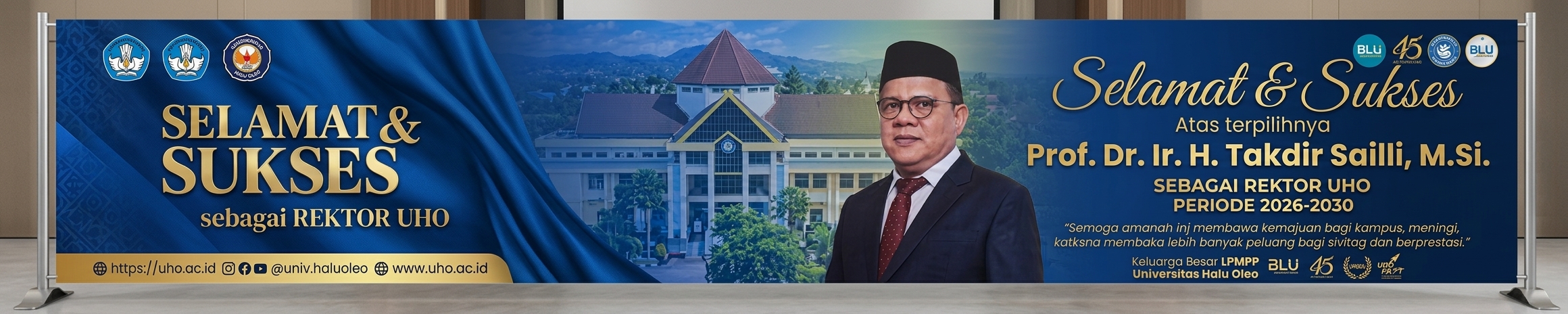
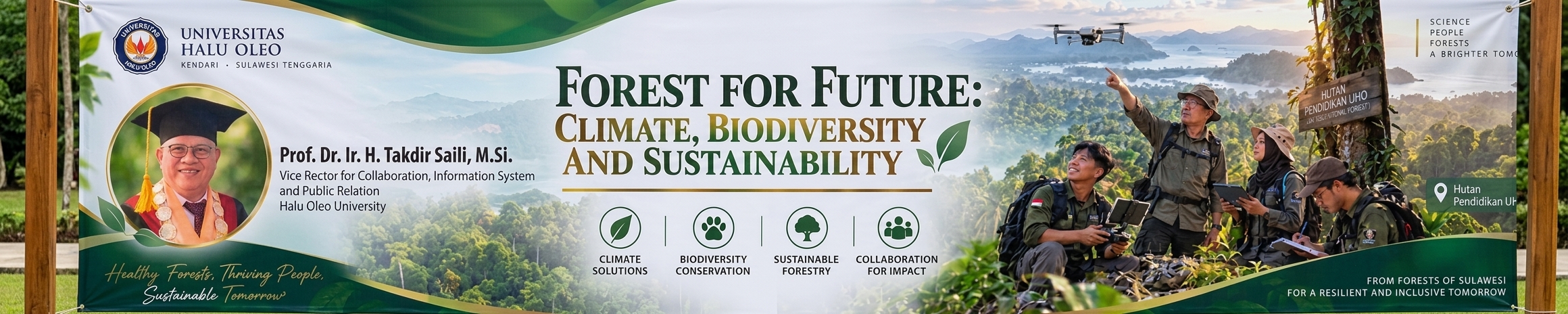
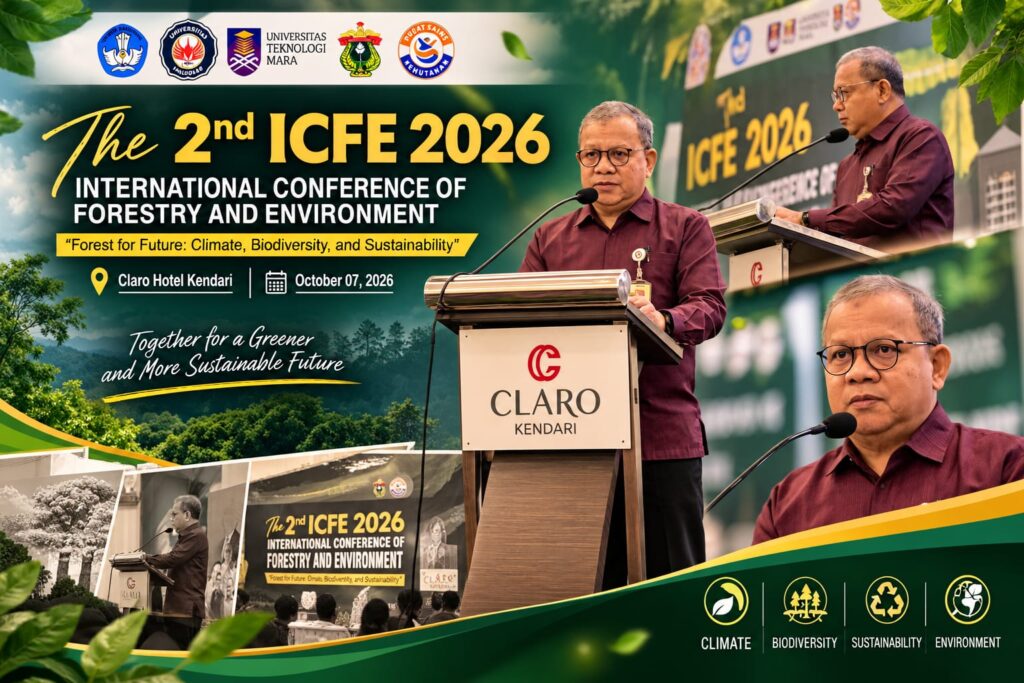
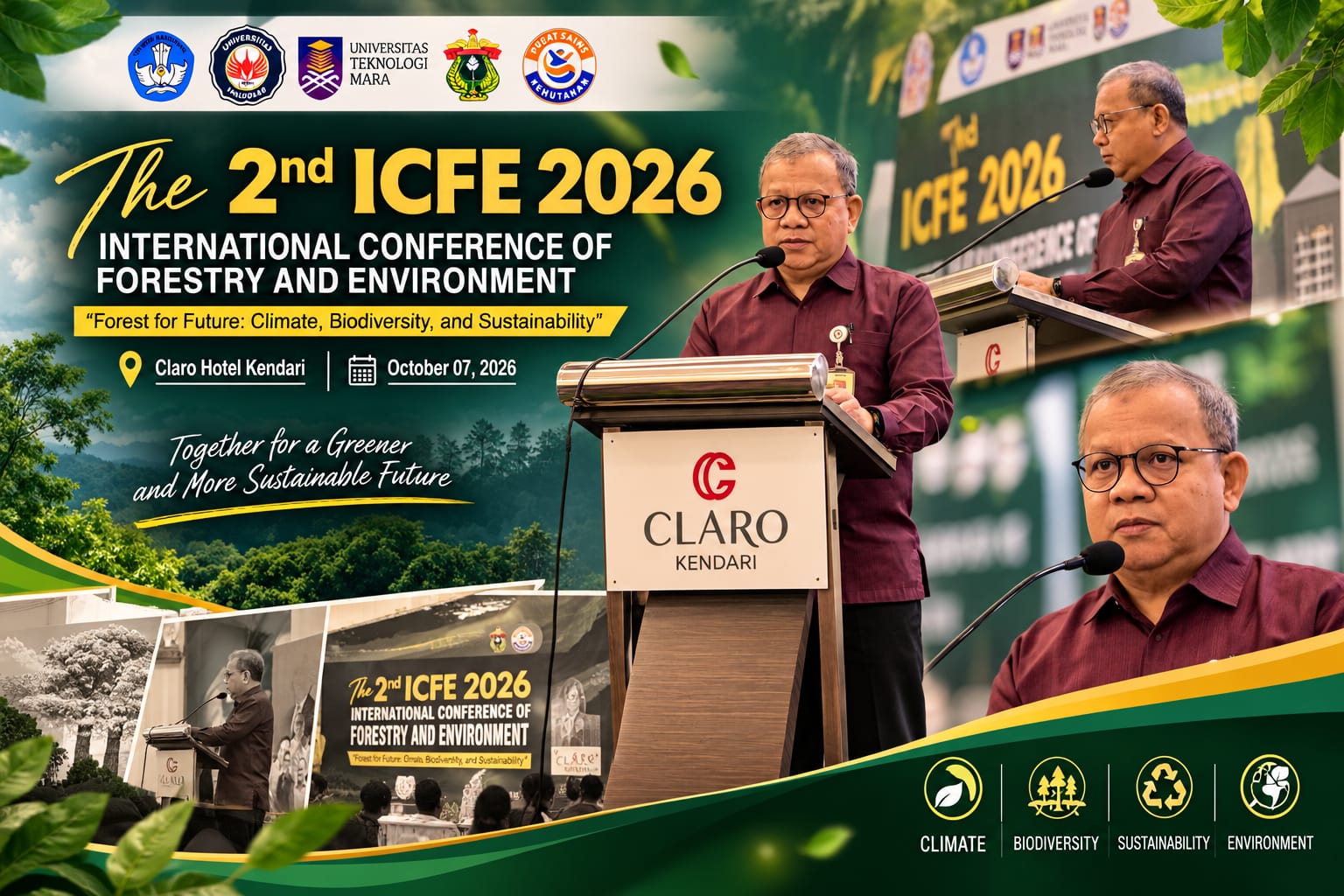
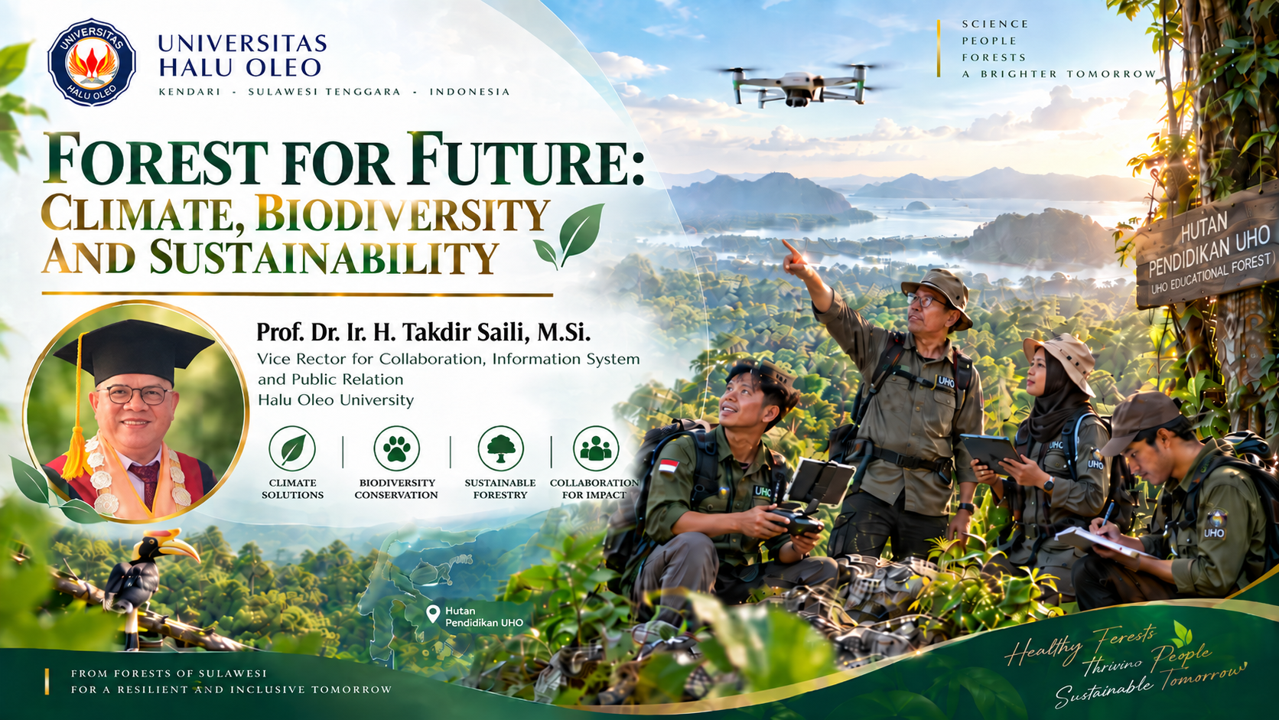 The Forestry Study Program under the Faculty of Forestry and Environmental Science at Halu Oleo University (UHO) officially convened the 2nd International Conference of Forestry and Environment (The 2nd ICFE) on Wednesday, October 7, 2026. Held in a hybrid format at the Claro Hotel Kendari, Southeast Sulawesi, the international forum carried the theme "Forest for Future: Climate, Biodiversity and Sustainability," bringing together prominent scholars, policymakers, researchers, and forestry practitioners from around the globe to address critical environmental challenges and formulate actionable sustainability strategies.
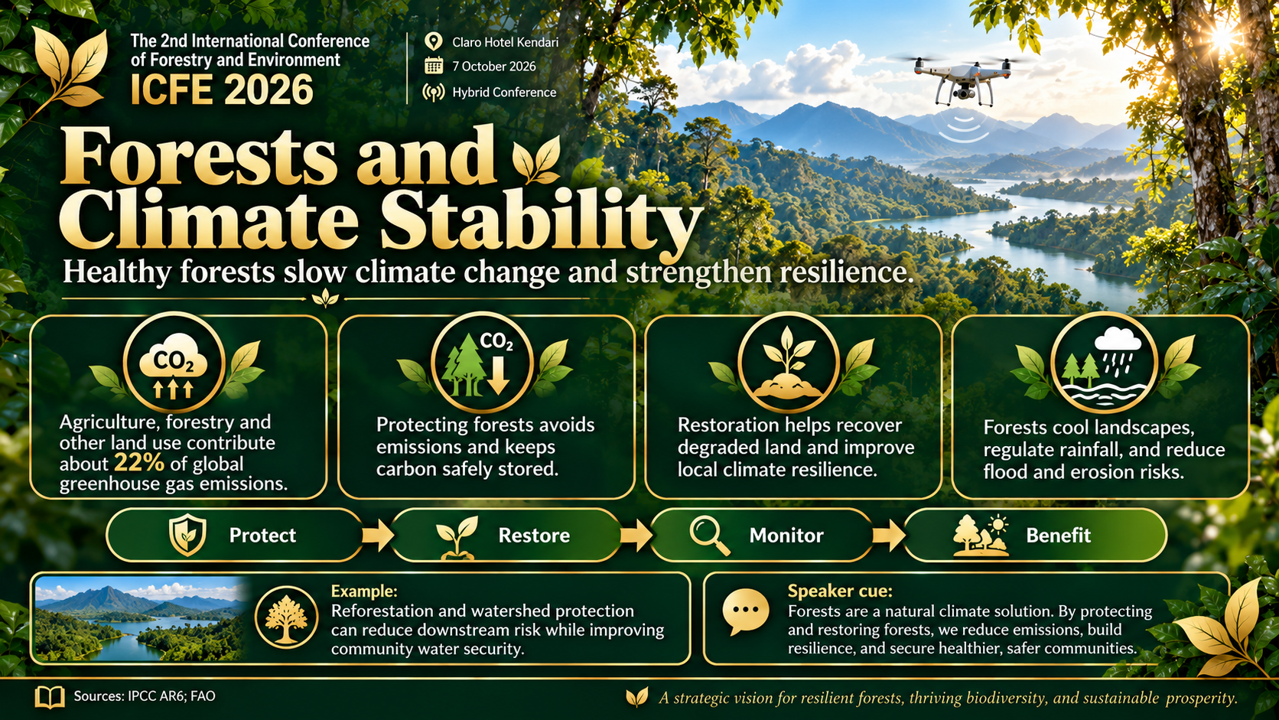
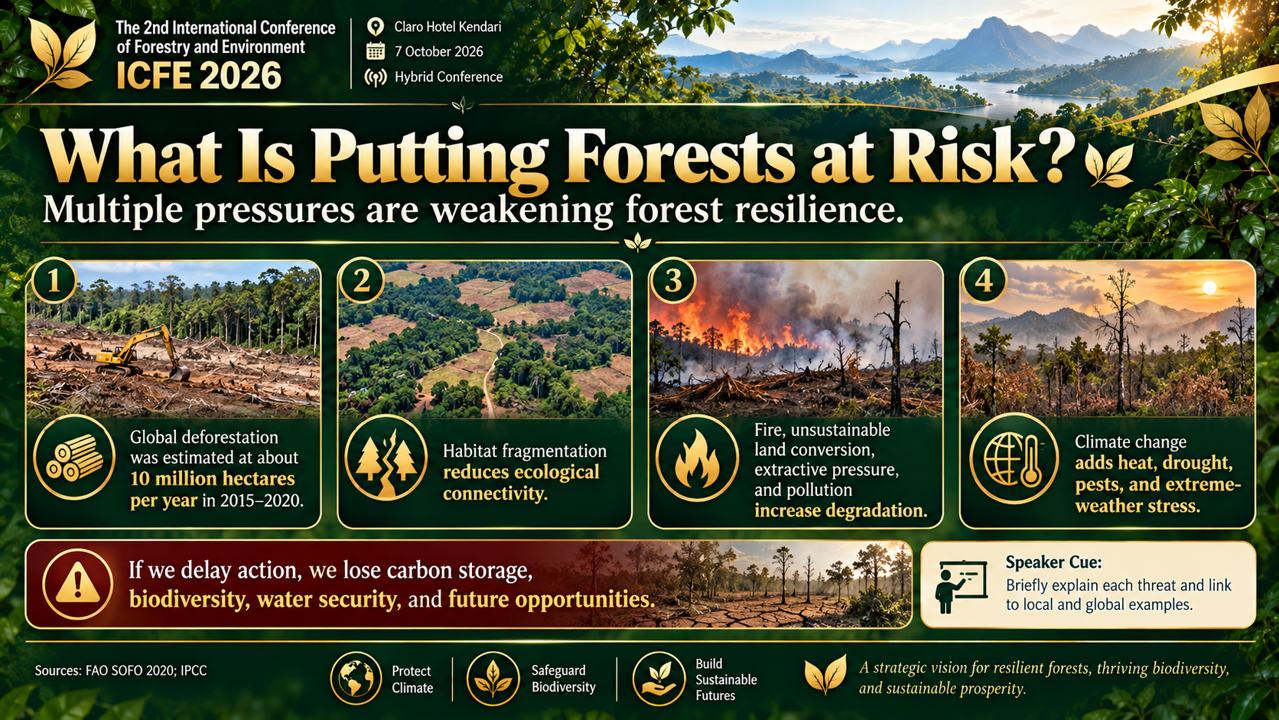
 Organized in collaboration with UiTM Malaysia and Hasanuddin University, The 2nd ICFE 2026 aims to generate high-impact scholarly publications in Scopus and Sinta-indexed proceedings, as well as policy briefs for strategic decision-makers. The international conference concluded with a unified commitment reflecting the core keynote message: to protect, restore, innovate, and collaborate toward a resilient and sustainable future for global forest ecosystems.
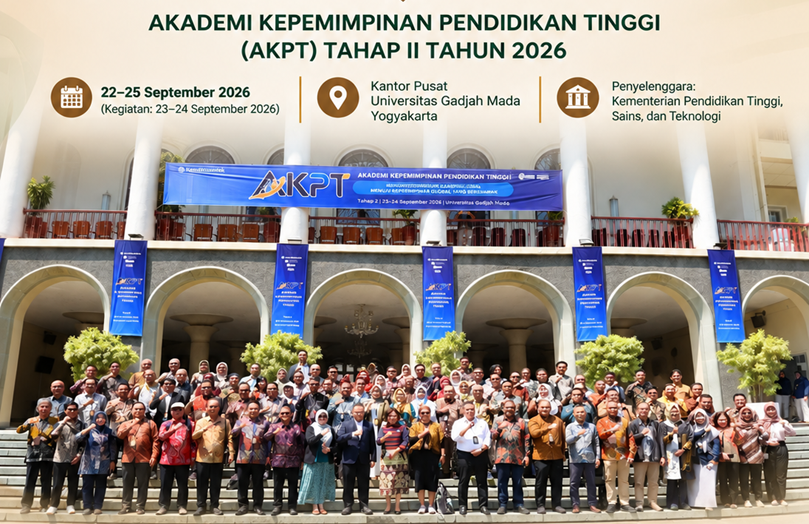
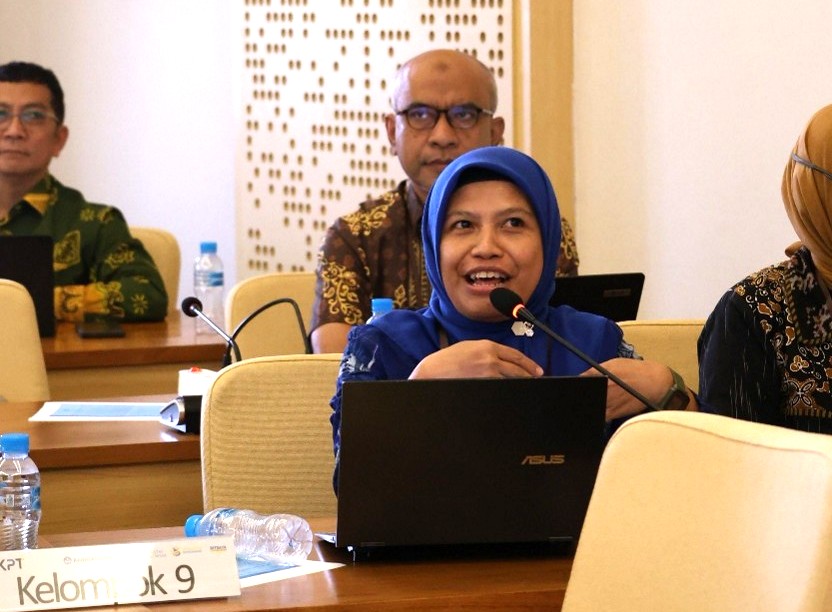 Dalam ajang bergengsi kelas Future Leaders yang diikuti oleh 66 peserta dari berbagai kampus nasional tersebut, Universitas Halu Oleo (UHO) turut berpartisipasi dengan mengutus dua perwakilan akademisi utamanya. Delegasi tersebut terdiri dari Prof. Dr. Muhammad Arba, S.Si., M.Si. selaku Wakil Dekan Bidang Akademik Fakultas Farmasi, dan Prof. Dr. Weka Gusmiarty Abdullah, S.P., M.P. yang menjabat sebagai Sekretaris Lembaga Penjaminan Mutu dan Pengembangan Pembelajaran (LPMPP) UHO.
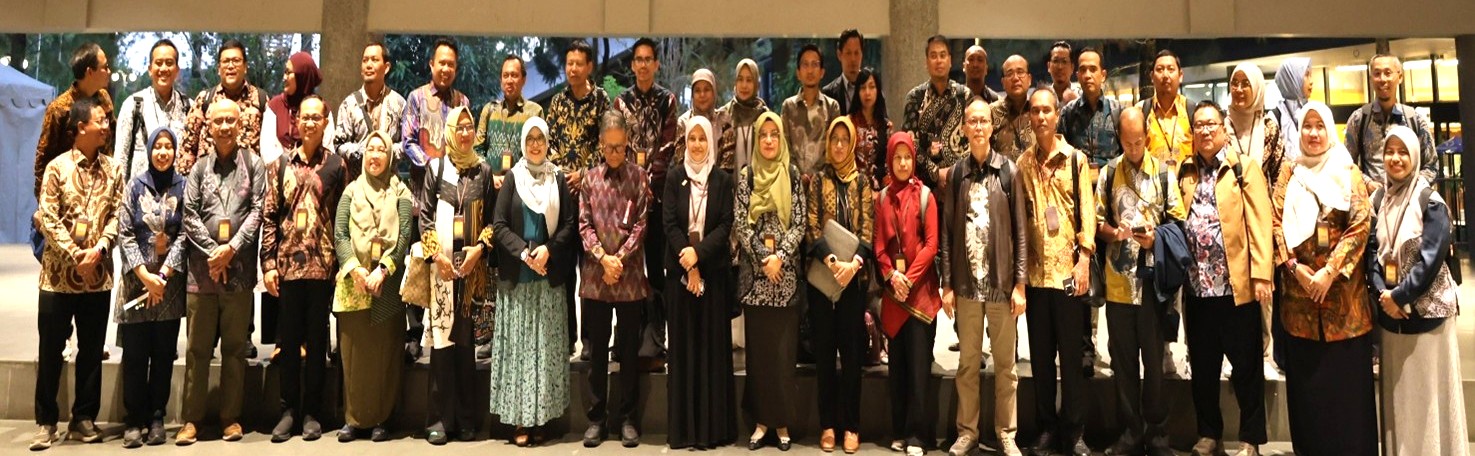 Bagi Universitas Halu Oleo, keikutsertaan dalam AKPT Tahap II ini memberikan implikasi strategis yang signifikan, terutama dalam hal pengembangan ekosistem talenta dan tata kelola inovasi. Analisis pasca-kegiatan mencatat bahwa UHO perlu segera membangun sistem informasi talenta unggul yang terintegrasi secara periodik, memastikan terlaksananya siklus PPEPP, serta menguatkan inovasi melalui kolaborasi hexahelix dan komersialisasi hasil riset.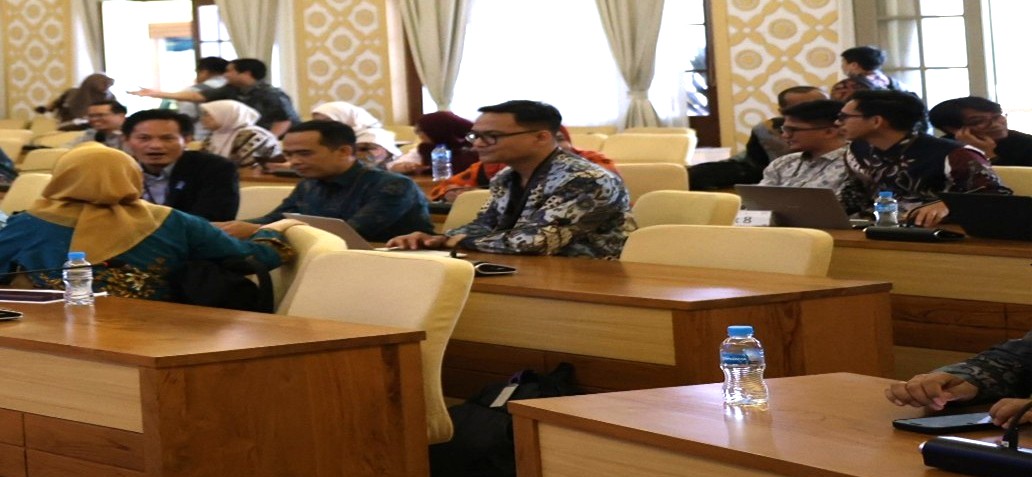
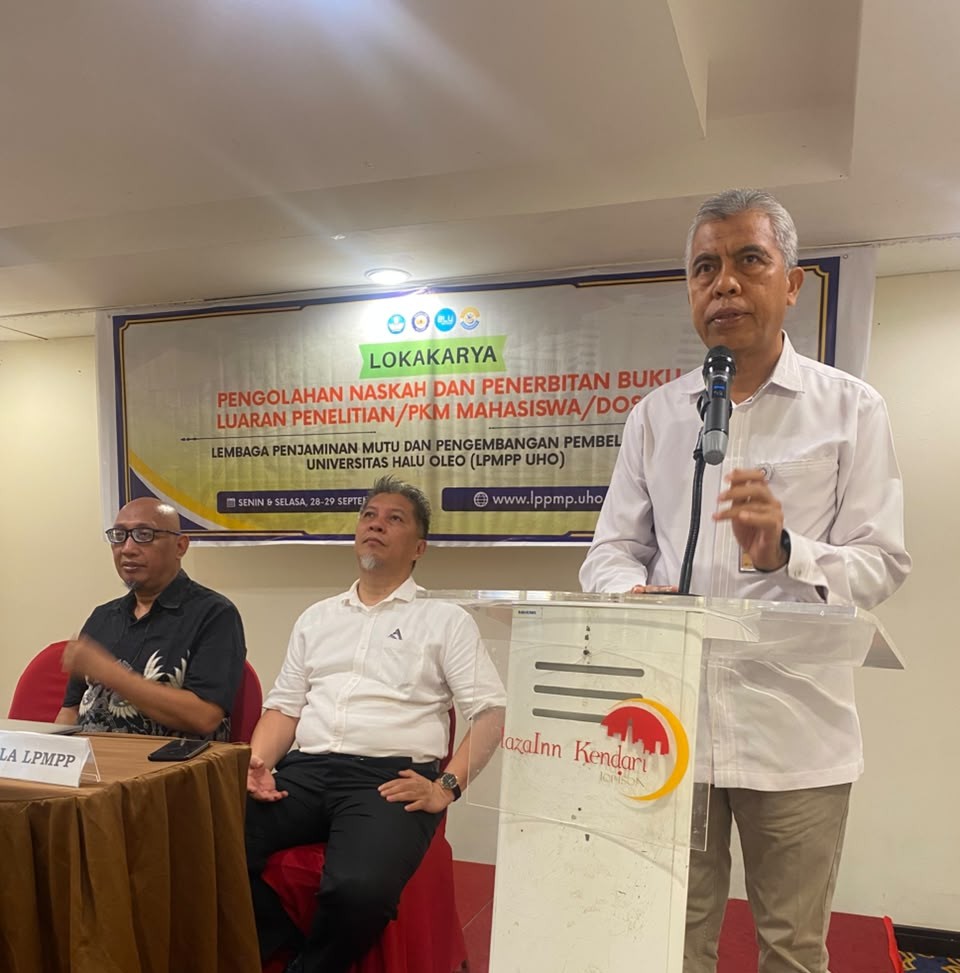
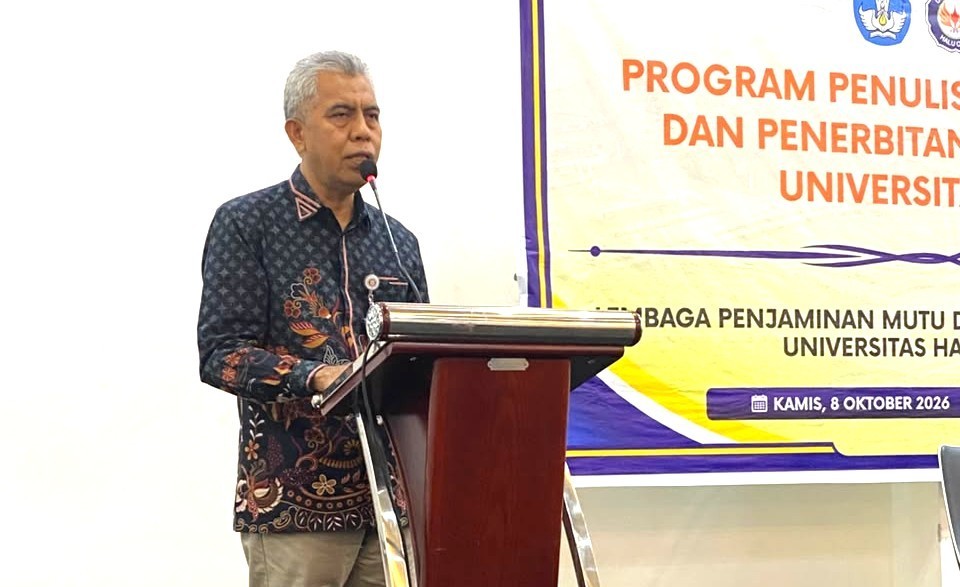
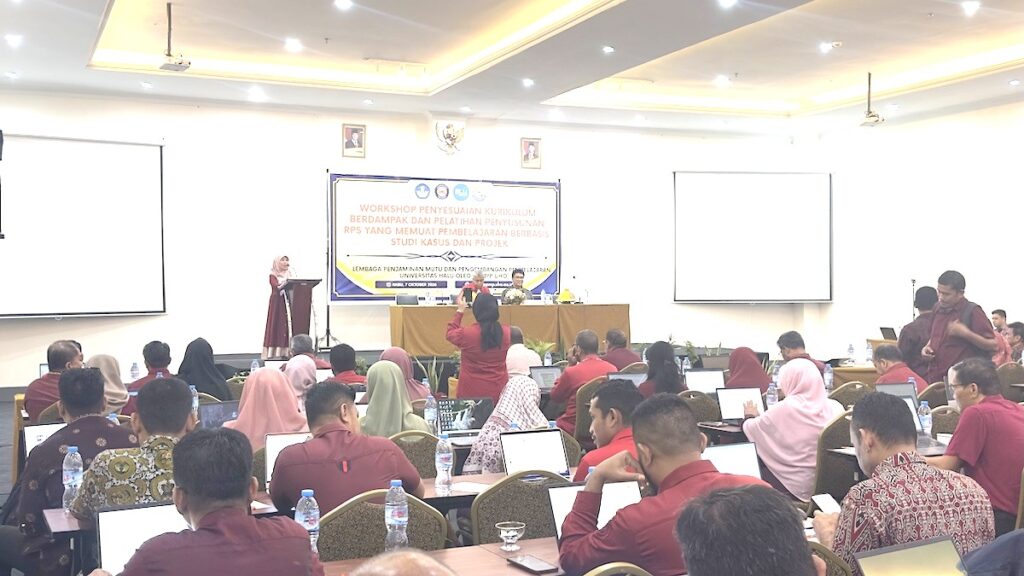
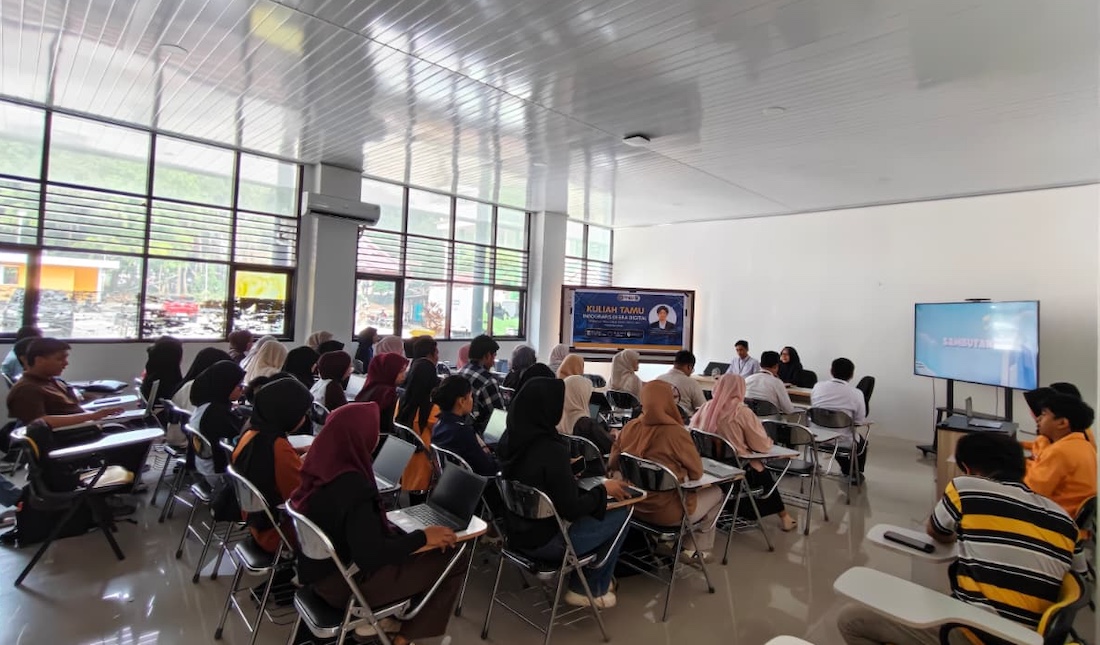
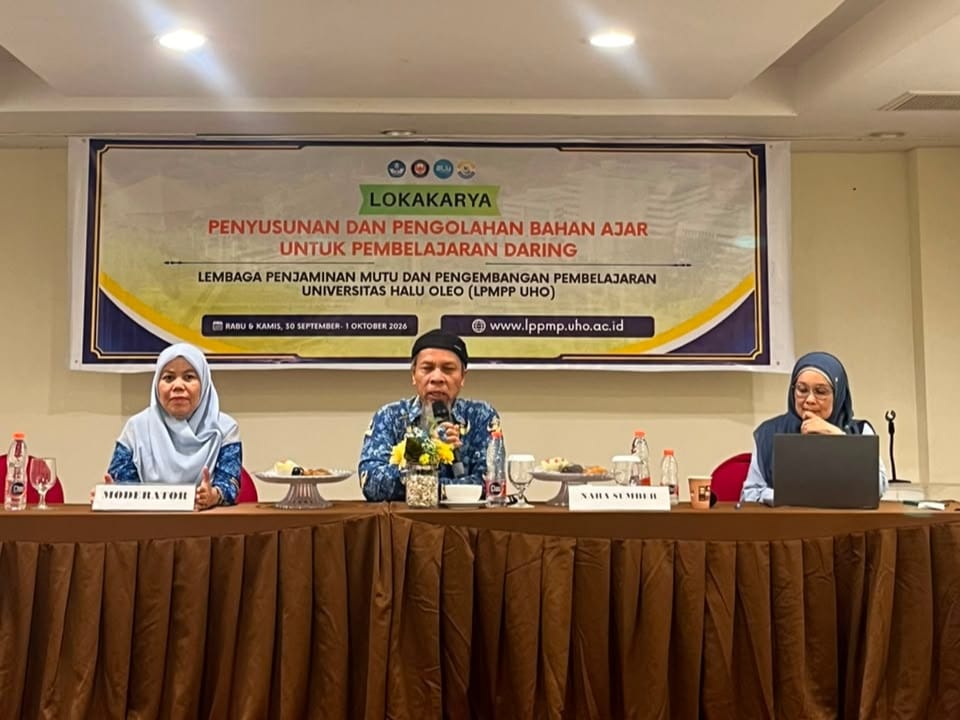
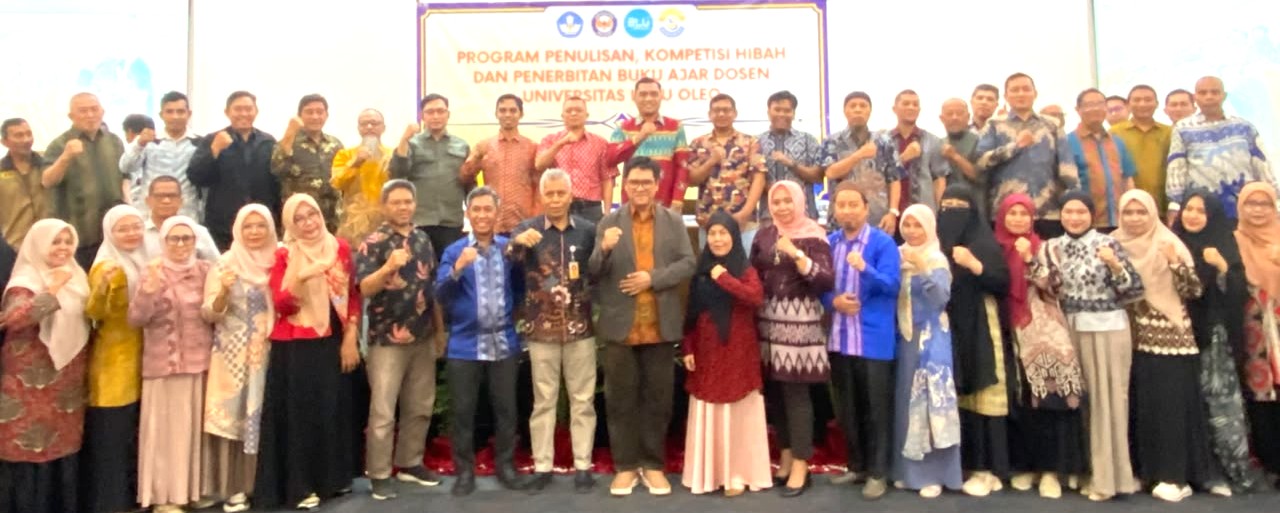 Rangkaian kegiatan yang berlangsung seharian penuh ini diawali dengan tahapan registrasi peserta oleh panitia pada pukul 08.00 WITA. Setengah jam berselang, acara memasuki sesi pembukaan resmi yang diisi dengan laporan dari Ketua Panitia pelaksana, Prof. Indriyani Nur, S.Pi., M.Si., Ph.D. Puncak dari sesi pembukaan ini adalah peresmian dimulainya kegiatan workshop secara langsung oleh Pelaksana Tugas (Plt.) Rektor UHO, yang diwakili oleh Wakil Rektor Bidang Akademik, Prof. Dr. La Ode Santiaji Bande, S.P., M.P., yang sekaligus menandai dukungan penuh pimpinan universitas terhadap pengembangan kapasitas literasi para dosen.
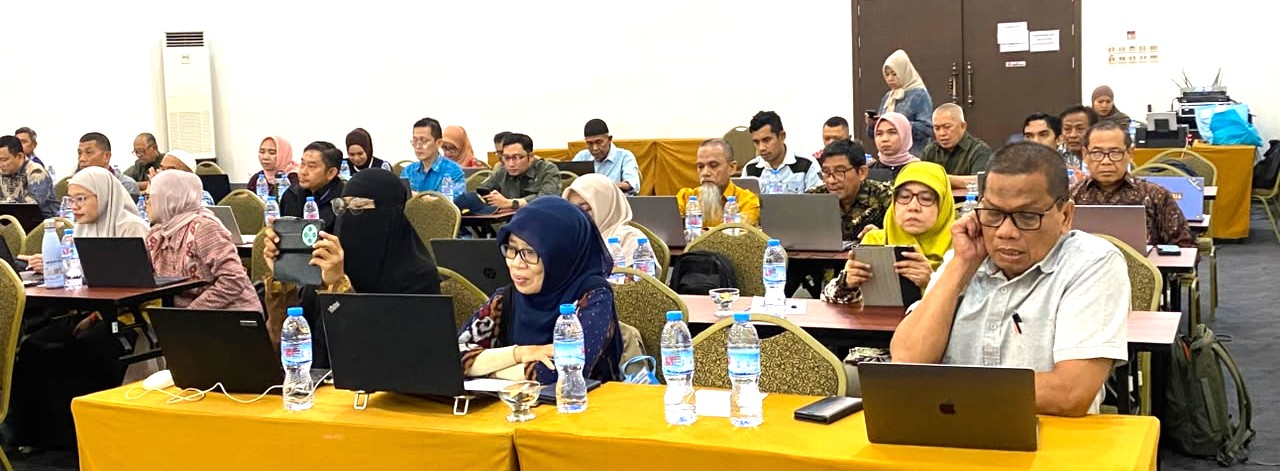 Memasuki sesi inti usai rehat kopi, para peserta disuguhkan dengan materi komprehensif terkait "Perancangan Buku Ajar Berbasis Capaian Pembelajaran". Materi pembuka ini disampaikan langsung oleh pakar kurikulum, Prof. Dr. Ir. Syamsul Arifin, M.T., yang merupakan Dosen Institut Teknologi Sepuluh Nopember (ITS) sekaligus Tim Ahli Kurikulum Pendidikan Tinggi dari Kementerian Pendidikan Tinggi, Sains, dan Teknologi. Dalam sesi yang dipandu oleh moderator La Rangki, S.Kep., Ners., M.Kep. ini, peserta diajak untuk menyelaraskan isi buku dengan target kompetensi lulusan.
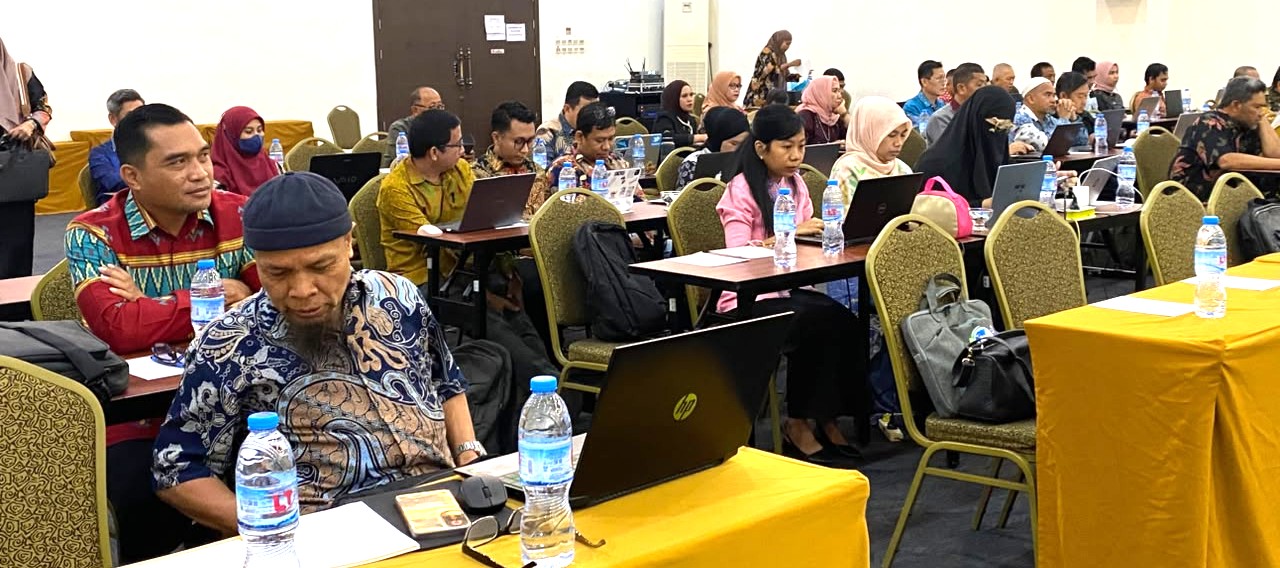 Menjelang sore hari, panitia menghadirkan sesi spesial secara daring (online) yang mengundang Dr. Mira Mirnawati, M.Pd., seorang dosen dari Universitas Pakuan sekaligus praktisi berpengalaman di bidang penerbitan karya tulis ilmiah. Dalam durasi satu setengah jam, Dr. Mira membekali para dosen UHO mengenai tahapan "Kesiapan Naskah Buku Ajar untuk Penyuntingan dan Penerbitan". Sesi ini sangat krusial bagi peserta agar naskah yang mereka susun nantinya dapat memenuhi standar editorial penerbit profesional.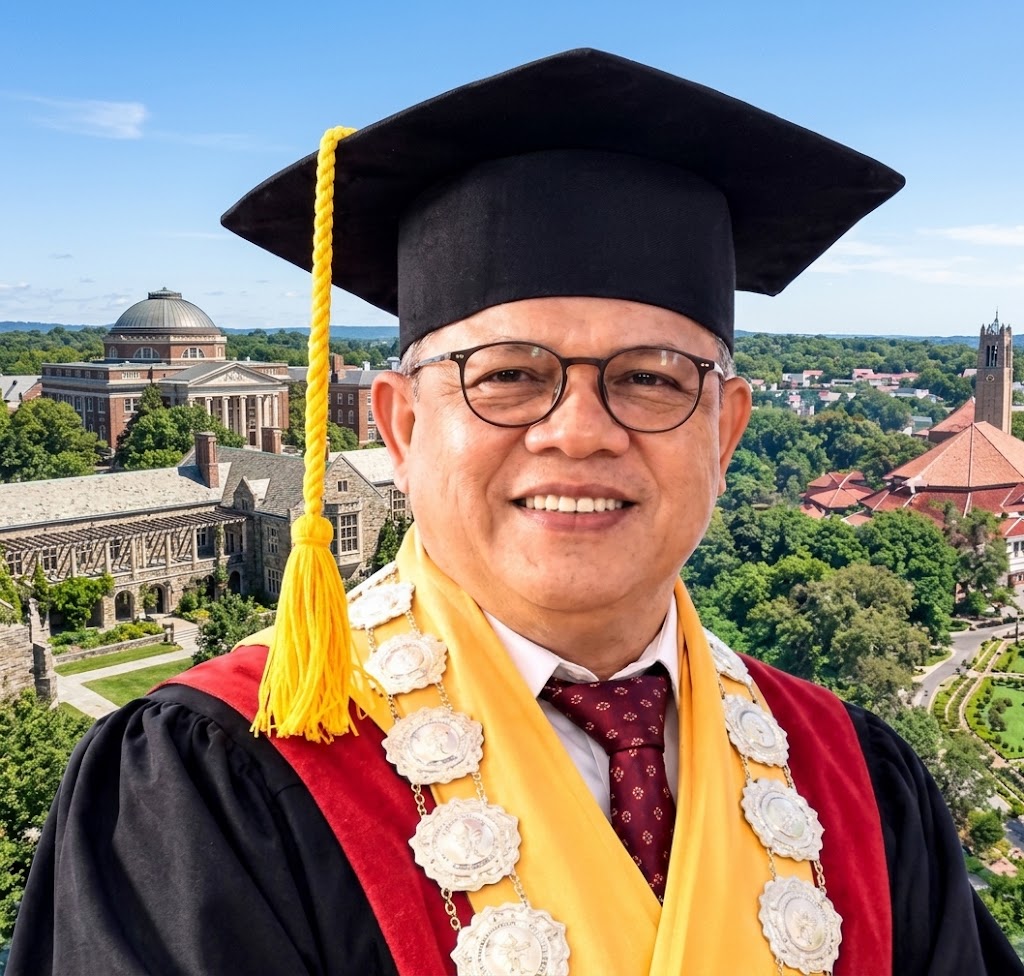
 LPPMP UHO